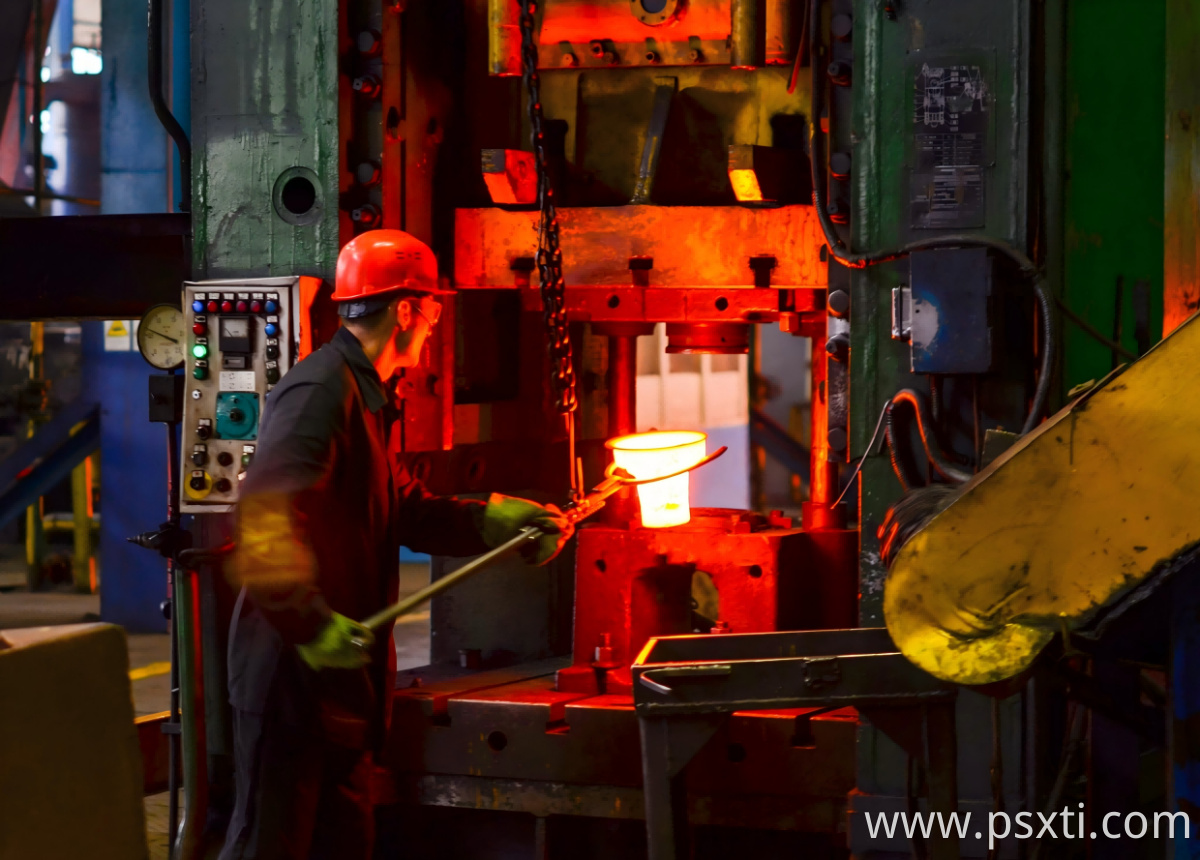
High Purity Titanium Block is a type of titanium often forged by Titanium Forgings, and today PSX is sharing some of the forging processes we sometimes use: Open Die Forging - Titanium billet material is deformed and pressed into shape in a cavity between two dies. These molds do not completely encase the material, but provide a narrow gap to allow excess material to escape. Titanium is pressed repeatedly in the die cavities until the desired shape is achieved.
Closed Die Forging - Also known as compression die forging, this method uses high pressure compression molding of heated titanium blanks. The blank is fully or partially covered by a die, which moves from top to bottom against each other to achieve the desired shape.
Free Forging - Small and/or simple orders can be accomplished by free forging, which is a method of forging titanium between two flat dies with no internal cavities. This is a relatively inexpensive and flexible method, but is not the most common method for forging large quantities of titanium due to the high labor requirements.
Isothermal Forging - A process in which the starting material and the die are heated to equal and highly controlled temperatures to achieve a high rate of deformation with minimal pressure.
Influence of forging temperature
Can titanium be forged at any temperature? Technically, yes, it is possible; however, the temperature used must be in accordance with the requirements of the process and the part.
Hot forging is more common than cold forging, but the latter may be cheaper and more environmentally friendly. It is important to note that lower temperatures (below 1650 degrees Fahrenheit) are only appropriate for unalloyed titanium, while higher temperatures are necessary for alloyed titanium.
It is not just the temperature of the titanium itself that is critical in the forging process. The temperature of the die must also be controlled, as excessive heat loss or heat variation can lead to defective parts.
The importance of temperature in the Titanium Forging Process is primarily related to the structural elements of the metal at different heat levels. By forging at the correct heat level for both the starting material and the die, the forger can forge a stronger, more reliable end product - structurally suited to the job at hand!