

Send Message
Privacy statement: Your privacy is very important to Us. Our company promises not to disclose your personal information to any external company with out your explicit permission.


Titanium ingot serves as the foundational raw material for manufacturing premium titanium rod, titanium tube, and titanium CNC machining components across aerospace, chemical, petroleum, and medical industries. For industrial procurement managers and manufacturing operators, standardized handling and scientific storage of high-quality titanium ingots are critical to avoiding material damage, performance degradation, safety accidents, and unnecessary cost losses. This comprehensive guide systematically explains titanium ingot properties, pre-operation preparation, professional handling techniques, standardized storage specifications, risk prevention, daily maintenance, industry standards, and the latest technical trends, providing actionable safety guidelines for global industrial manufacturers, OEM/ODM processors, and material distributors. It also highlights the advantages of PSX high-quality industrial titanium ingots and professional manufacturing strength, helping buyers select reliable titanium raw material suppliers and optimize on-site material management workflows.
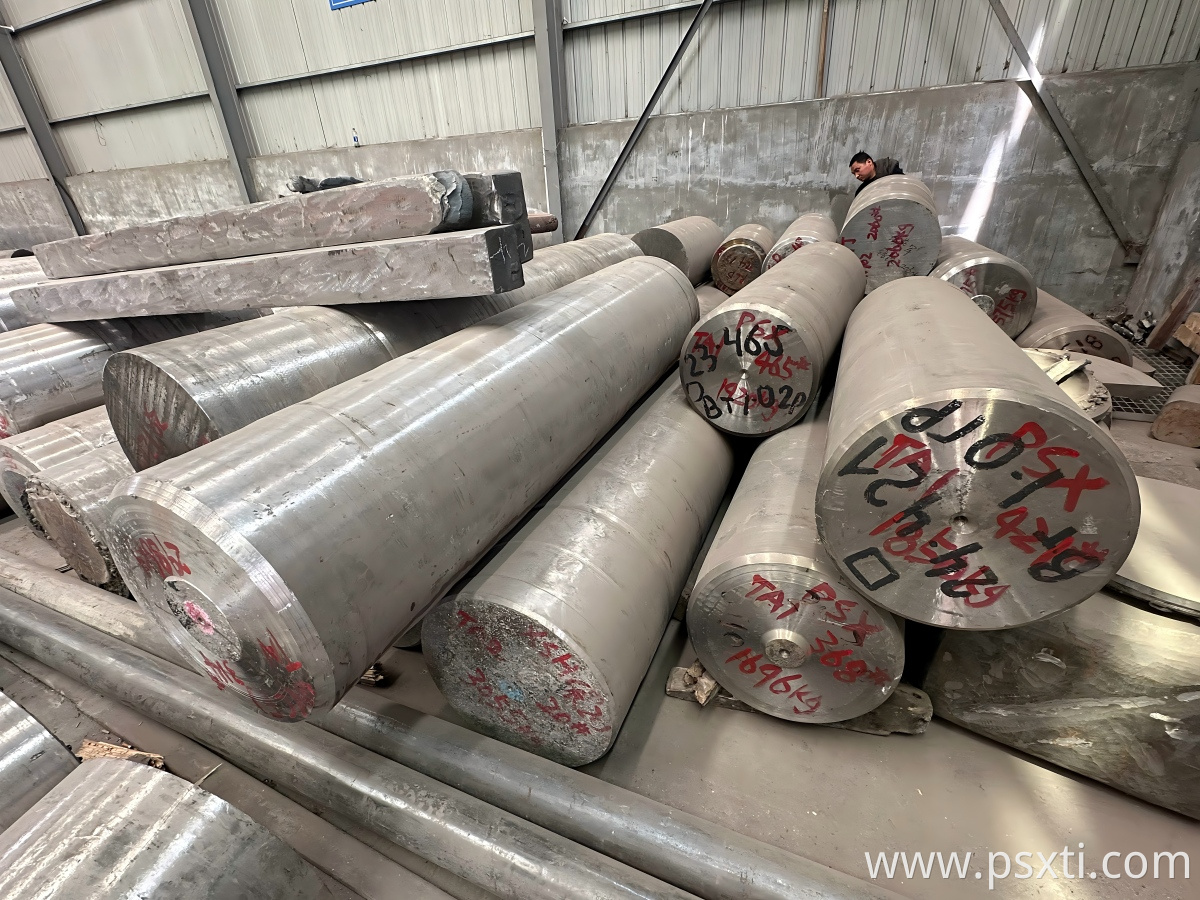
Titanium ingot is the primary semi-finished product of titanium material and the core raw material for processing a full range of titanium industrial products, including titanium flange, titanium shaped parts, and Titanium Alloy components. PSX high-quality titanium ingots are produced via triple vacuum arc remelting (VAR) and electron beam cold bed melting (EBCHM) technologies, using high-purity sponge titanium as raw material, with customizable alloy ratios of aluminum, vanadium, and molybdenum.
As the source material for downstream titanium processing, qualified titanium ingots directly determine the quality, durability, and processing performance of finished titanium products. They are widely used in aerospace equipment manufacturing, medical implant production, petrochemical reaction equipment, marine engineering facilities, and automotive lightweight manufacturing. Because of their importance, industrial buyers need clear specifications for handling, storing, and inspecting every batch of titanium ingot before production begins.
From 2025 to 2026, the global titanium ingot manufacturing industry is entering an upgrading cycle focused on high purity, low carbonization, and intelligent precision smelting. Driven by the rapid development of aerospace lightweight manufacturing, new energy chemical equipment, and medical precision components, market demand for high-standard titanium ingots continues to rise, while technical iteration is accelerating. Traditional single vacuum smelting is gradually being replaced by multi-stage vacuum remelting and electron beam melting processes, which help reduce gas impurities and internal porosity while improving material uniformity and processing stability. The global industry is also promoting carbon-neutral titanium smelting technology, with leading manufacturers optimizing energy structures and adopting cleaner production processes to lower the carbon footprint of titanium ingot production. For industrial buyers, these technology upgrades mean higher material consistency and lower post-processing failure rates, but they also place higher demands on standardized handling and storage. High-purity titanium ingots are more sensitive to mishandling, contamination, and improper storage, so even small operational errors can offset the quality advantages created by advanced smelting technology.
European and American industrial buyers, including petrochemical manufacturers, aerospace OEMs, medical equipment factories, and material distributors, have established mature and rigorous evaluation standards for industrial titanium ingots. Their five core concerns are product quality, traceability, compliance, supply reliability, and technical support. First, they prioritize international standard compliance, especially conformance to ASTM B977, AMS 4928, and ISO 5832, together with a complete Certificate of Analysis and third-party test support. Second, they focus on batch stability and impurity control, because high-end manufacturing strictly limits Fe, C, N, H, and O contents. Third, they verify whether titanium ingot properties, dimensions, and packaging are compatible with safe handling and storage systems in their factories. Fourth, they evaluate customization capability to match downstream titanium material processing lines and reduce material waste. Fifth, they assess green production credentials and after-sales technical support, including guidance on storage, handling, and processing. For PSX, these buyer requirements are addressed through full-grade customization, strict process control, COA traceability, and responsive customer support.
Before handling titanium ingots, facilities must complete standardized workplace preparation to eliminate potential hazards. The operating area should be an independent, well-ventilated, dry indoor space, physically separated from flammable, explosive, and corrosive chemical materials such as strong acids, strong alkalis, and organic solvents. The floor must be flat, wear-resistant, non-slip, and capable of supporting the weight of titanium ingots, which typically range from 1 ton to 5 tons each. Factories should clearly mark dedicated handling zones, temporary stacking zones, and inspection zones, and maintain unobstructed emergency exits. Good dust collection and fire prevention facilities should also be in place before any heavy metal raw material movement begins.
All personnel involved in titanium ingot handling must wear full standard safety equipment:
Titanium ingots are heavy industrial raw materials, and manual lifting is strictly prohibited. All movement operations must use certified mechanical equipment and standardized procedures. Before each lift, the crane, slings, lifting beams, and attachments must be inspected for load capacity, wear, and fastening condition. Operators should use balanced multi-point lifting methods to distribute weight evenly and prevent deformation or slippage. During lifting, the titanium ingot must remain stable, with no sudden acceleration, dropping, or swinging. Personnel must never stand or walk beneath a suspended load. Once the ingot is correctly positioned, operators should release the load gradually and remove lifting attachments carefully to avoid collision damage.
For short-distance movement inside the facility, dedicated flatbed transport vehicles are recommended instead of ordinary forklifts. Titanium ingots must be secured with anti-slip and anti-collision restraints to prevent rolling or shifting during transit. Transport speed should be low and uniform, with controlled braking, slow turning, and avoidance of rough road sections. The route should be planned in advance to avoid crowded production areas and flammable or explosive storage zones. After arrival, the ingot must be unloaded at the designated stacking location and placed stably to prevent tilting or collapse.
Storage quality directly affects the subsequent processing performance and service life of titanium ingots. Based on long-term industrial practice, PSX recommends that storage warehouses remain dry, clean, and well-ventilated, with ambient temperature controlled between 10℃ and 30℃ and relative humidity kept below 60%. Long-term storage in high-temperature, high-humidity, or dusty conditions should be avoided. The warehouse should also be isolated from corrosive gases, acid and alkali liquids, and salt spray environments, because these conditions can cause surface oxidation and degrade material quality over time.
Although titanium ingots have excellent natural corrosion resistance, long-term exposure to aggressive industrial environments can still cause surface oxidation and performance degradation. During storage, facilities must strictly separate titanium ingots from salt spray, chloride ions, and volatile acid or alkali gases. Long-term stored ingots should be protected with professional anti-oxidation wrapping films, and surfaces should be cleaned regularly to remove dust and contaminants. Contact with steel, copper, and other dissimilar metals should also be avoided, because galvanic effects can accelerate localized corrosion under humid conditions.
Extreme temperature fluctuations can affect the structural stability of titanium ingots. In high-temperature environments, direct sunlight should be avoided to prevent uneven thermal expansion. In low-temperature environments above freezing, warehouses should remain warm and dry, while storage in freezing and humid conditions should be prohibited. Long-term exposure to extreme temperatures can cause subtle changes in internal microstructure, which may reduce ductility and affect downstream titanium forging performance.
Titanium powder can be flammable under high-temperature and oxygen-rich conditions, so strict fire safety management is required in storage areas. Open flames, welding, cutting, and high-temperature heating work should be prohibited in the titanium ingot warehouse. Facilities should provide adequate dry powder fire extinguishers and fire sand, while water and foam extinguishers are not recommended for titanium metal fires. Regular cleaning of metal dust is also necessary to prevent accumulation and reduce fire risk.
Factories should establish a three-level inspection system covering daily, weekly, and monthly checks. Daily inspections focus on environmental humidity, temperature, ingot stability, and clearance around stacks. Weekly inspections check for surface oxidation, dust buildup, packaging damage, and support conditions. Monthly inspections include sampling checks of appearance, geometry, and structural integrity, with inspection records stored for traceability. Any ingots showing oxidation, scratching, or deformation should be isolated and clearly marked to prevent mixing with production-ready material.
When issuing titanium ingots for production, follow the first-in, first-out principle to reduce long-term idle storage. After material withdrawal, remaining ingots should be re-secured and the storage area cleaned. During handling and production use, avoid unnecessary scratching, collision, or extrusion. For ingots scheduled for downstream processing, pre-check the surface condition and remove loose dust and oxide layers before machining. These simple maintenance steps help protect material quality and support consistent results when producing titanium bar, titanium tube, and precision components.
The production, handling, and storage of industrial titanium ingots are supported by strict international and industry specifications. These standards provide a common technical basis for quality assurance and safety management:
PSX titanium ingot products are manufactured in accordance with these authoritative standards, and each batch is supplied with a detailed Certificate of Analysis. This traceability system helps industrial buyers meet incoming inspection requirements and maintain compliance in their own production chains.
As global industrial manufacturing continues to upgrade, PSX’s R&D team has focused on innovation in titanium ingot smelting and process control. The company has developed intelligent precision alloying technology and low-carbon vacuum smelting processes that enable accurate control of alloy element ratios and improve ingot homogeneity and stability. Compared with traditional processes, the new technology reduces production energy consumption while increasing yield, supporting both green industrial goals and downstream processing efficiency. In application innovation, PSX has developed high-purity, ultra-low-impurity titanium ingots for medical implants and deep-sea marine equipment, while customized lightweight titanium alloy ingots are used in automotive lightweighting and aerospace upgrades. Future development will focus on high-temperature-resistant and ultra-corrosion-resistant titanium ingots, expanding the material’s boundary in extreme industrial environments. For procurement managers, these technology trends mean that supplier R&D capability is becoming as important as product price when selecting a long-term titanium ingot partner.
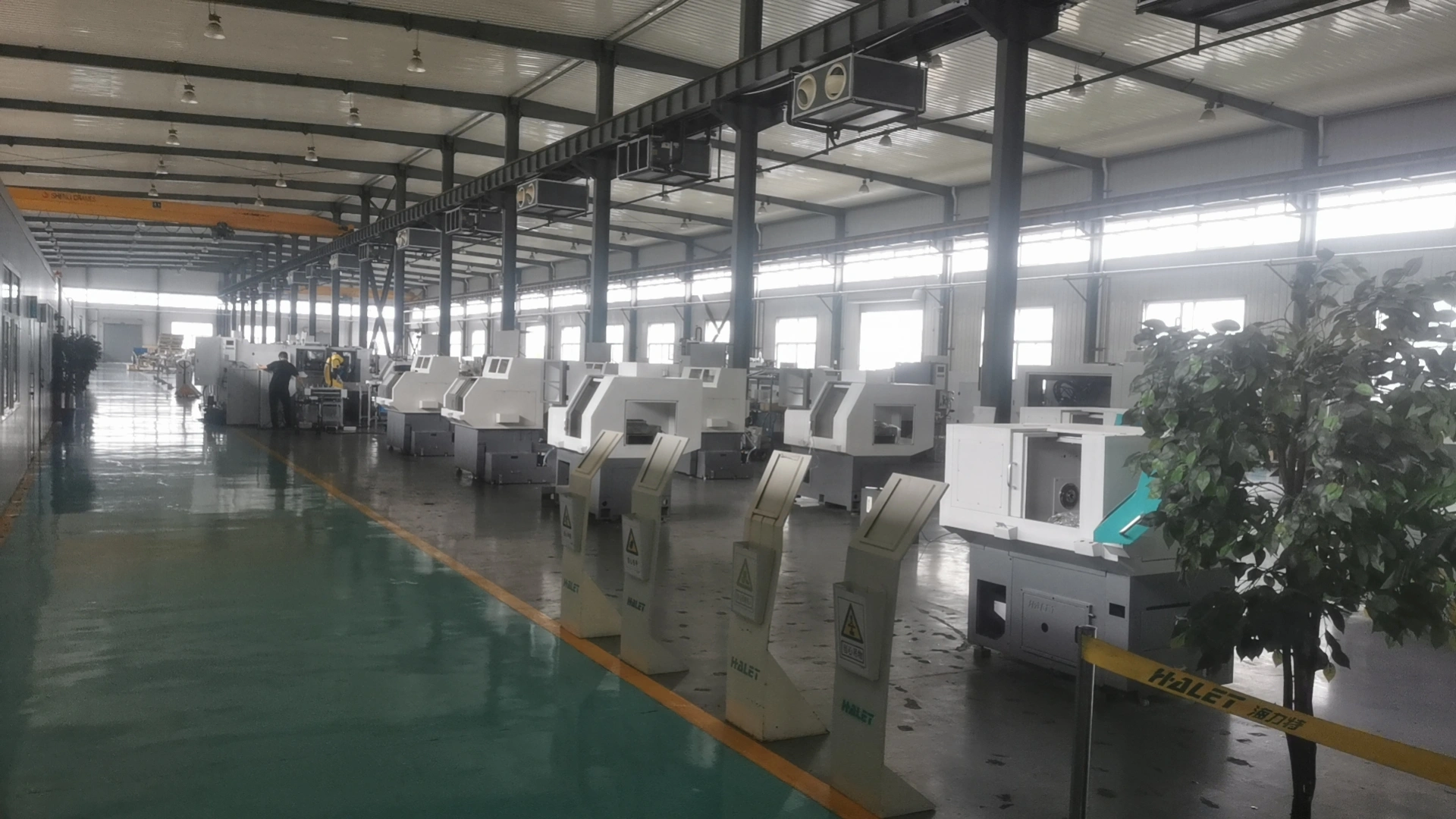
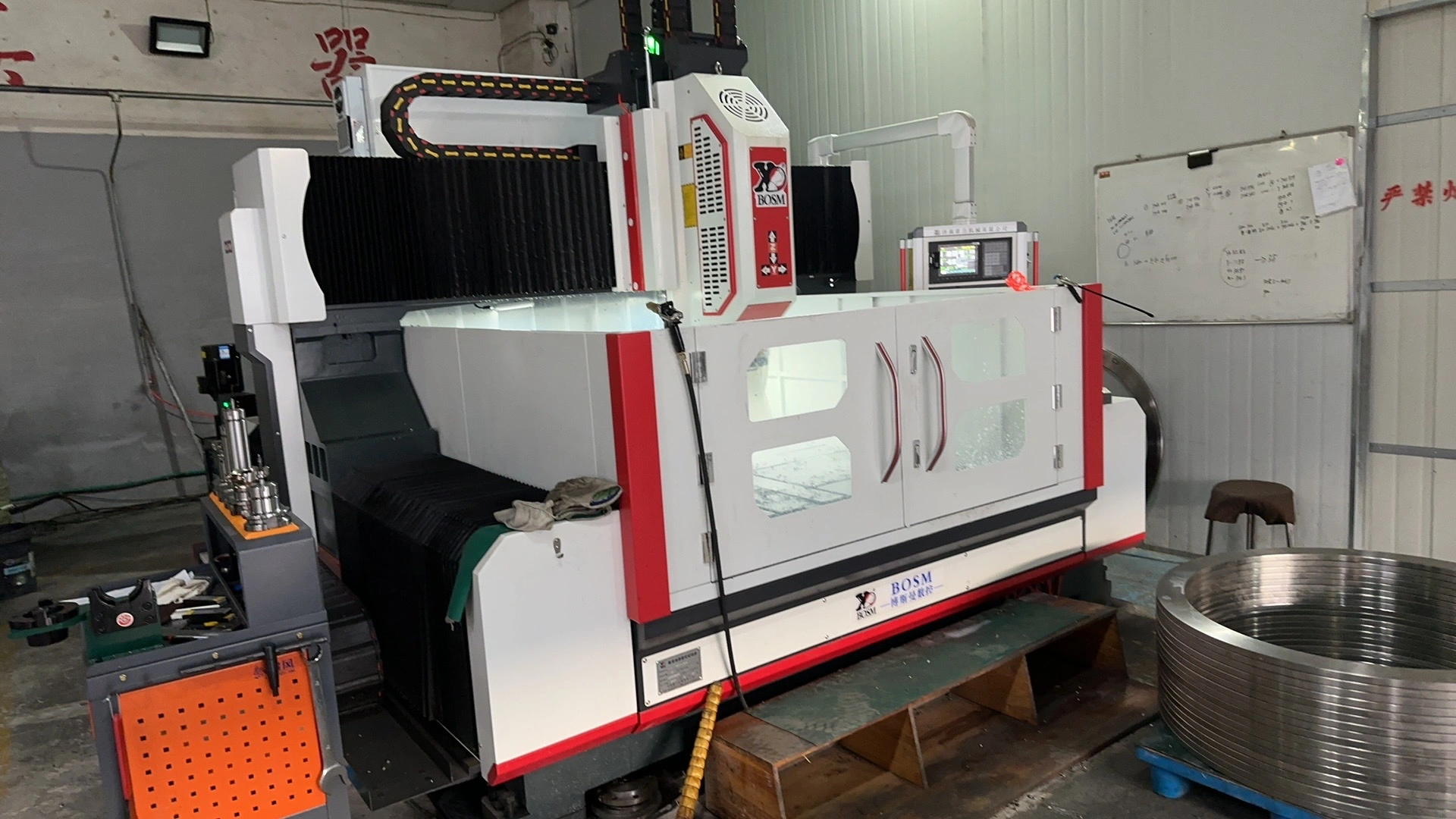
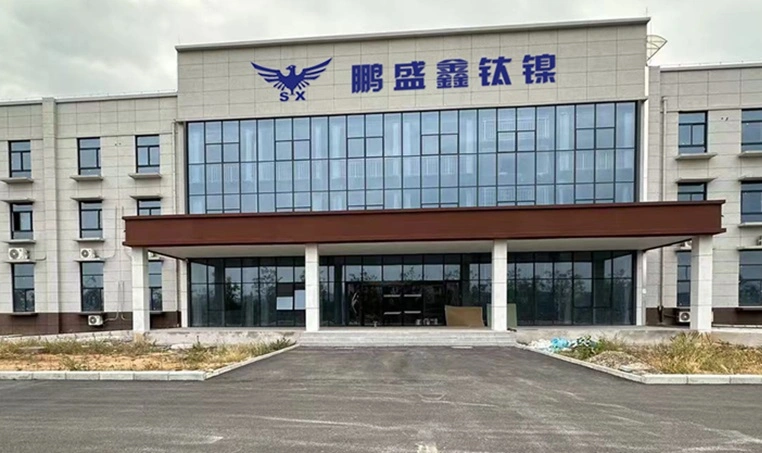
Baoji Pengshengxin Non-Ferrous Metal Co., Ltd., operating as PSX, was founded in 2008 and is located in Baoji High-Tech Development Zone, known as China’s Titanium Valley. With more than 17 years of experience in titanium material manufacturing, the company operates a modern 5,000-square-meter production base, advanced VAR and EBCHM melting equipment, and a technical team including experienced material engineers and skilled production personnel. PSX provides a full product portfolio covering titanium ingots, titanium material, titanium bar, titanium tube, titanium flange, titanium forging, and titanium CNC machining.
PSX has integrated production lines from raw material melting and precision processing through final quality inspection, enabling independent control of the titanium ingot supply chain. The company holds ISO9001 and GJB9001C-2017 certifications and applies full-process quality management to ensure consistent product quality. Each batch of titanium ingot is tested for chemical composition, mechanical properties, and surface quality, with detailed documentation provided to customers.
A1: Industrial titanium ingots should generally be stacked in no more than 3 layers to reduce structural compression risk. Large and heavy ingots are better placed in a single layer, with sufficient gaps between stacks for ventilation and inspection.
A2: Titanium ingots do not rust like carbon steel, but long-term exposure to humid and salt spray environments can cause surface oxidation and discoloration. For extended storage, use anti-oxidation wrapping and maintain a dry, controlled warehouse environment.
A3: High humidity, extreme temperature fluctuation, corrosive gases, salt spray, and accumulated metal dust can all affect surface condition and long-term material stability. Consistent environmental control is essential for high-value titanium raw materials.
A4: Ordinary forklifts are not recommended for heavy titanium ingots. Dedicated flatbed transport vehicles and properly matched lifting attachments should be used to ensure stable load distribution and prevent slippage or collision.
A5: Under dry, clean, and temperature-controlled conditions, titanium ingots can be stored safely for more than three years. However, long-term stored material should be reinspected every six months before entering production.
A6: Buyers should review the Certificate of Analysis, check material grade and dimensions, verify batch labeling, and inspect the surface for oxidation, scratches, or deformation. PSX also supports third-party testing to confirm material properties before delivery.
Standardized handling and scientific storage of titanium ingots are essential steps for maintaining material performance, reducing processing costs, and preventing workplace safety incidents. This guide covers the complete workflow from workplace preparation, mechanical handling, and in-plant transportation to environmental storage control, corrosion and fire prevention, daily inspection, and maintenance. For industrial procurement managers, understanding these requirements helps evaluate supplier quality, incoming material control, and factory operational capability more systematically. As a professional titanium ingot manufacturer, PSX supports global industrial buyers with high-quality titanium raw materials, technical documentation, customization services, and responsive after-sales support. Whether your business is in aerospace, chemical processing, petroleum equipment, medical devices, or OEM manufacturing, PSX can help you source reliable titanium ingots with consistent quality and industrial traceability.

September 15, 2025

September 30, 2026

September 29, 2026
Email to this supplier
September 15, 2025
September 30, 2026
September 29, 2026
Privacy statement: Your privacy is very important to Us. Our company promises not to disclose your personal information to any external company with out your explicit permission.
Fill in more information so that we can get in touch with you faster
Privacy statement: Your privacy is very important to Us. Our company promises not to disclose your personal information to any external company with out your explicit permission.