Home> Industry News> Step-by-Step Guide to Installing Titanium Weld Neck Flanges

Step-by-Step Guide to Installing Titanium Weld Neck Flanges

2026,08,10
PSX Logo

Step-by-Step Guide to Installing Titanium Weld Neck Flanges

High Strength Titanium Weld Neck Flange
Blog Overview: Proper installation directly determines the sealing performance, service life and operational safety of Titanium Weld Neck Flange. This comprehensive step-by-step guide targets procurement managers, engineering technicians and factory operators in petrochemical, marine, new energy and hydrometallurgy industries. We cover preparation, safety standards, alignment, titanium welding procedures, post-weld inspection, common errors and maintenance advice for High Strength Titanium Weld Neck Flange . This article also includes industry standards, market purchasing concerns and PSX manufacturing advantages for global buyers sourcing reliable titanium flange products.

1. Introduction to Titanium Weld Neck Flanges

High Strength Titanium Weld Neck Flange belongs to high-grade pipeline connection fittings manufactured via integral Titanium CNC Machining and Titanium Forging technology from Gr2 pure titanium and Gr5 Titanium Alloy raw materials. The tapered long neck structure disperses pipeline stress effectively and avoids weld stress concentration. Compared with slip-on flanges and plate flanges, titanium weld neck flanges adopt full-penetration butt welding to form an integrated piping system.

Benefiting from excellent corrosion resistance and lightweight high specific strength properties, these flanges match perfectly with Titanium Tube for extreme working conditions including high temperature, high pressure, seawater erosion and acid-alkali medium transport. Widely deployed in seawater desalination, offshore engineering, petrochemical production, electrolytic hydrogen production and aerospace equipment, they are the preferred solution for high-risk corrosive pipeline projects worldwide.

2. Tools and Materials Required Before Installation

2.1 Essential Tools

  • Precision calipers, level gauge and straightedge for dimensional inspection
  • Titanium-specialized welding equipment and inert gas shielding system
  • Torque wrench, bolt set and alignment fixtures
  • Wire brush, polishing tool and cleaning solvent for titanium surface treatment
  • Ultrasonic testing equipment and penetration testing consumables for post-weld inspection

2.2 Supporting Materials

  • Qualified High Strength Titanium Weld Neck Flange (Gr2 / Gr5 grade as project requirements)
  • Matching Titanium Pipe consistent with flange material grade
  • Corrosion-resistant sealing gasket matching RF, FF or RTJ flange face
  • Titanium welding filler wire
  • Anti-contamination protective cloth and dust isolation materials

3. Safety Precautions and Best Practices

Titanium welding and flange installation carry unique safety risks. All operators must follow standardized safety rules to prevent oxidation contamination, fire hazards and personal injury.

  • Operators must wear high-temperature resistant gloves, protective eyewear and dust-proof masks.
  • Strictly avoid direct contact between titanium surface and iron, copper or carbon steel to prevent iron contamination and galvanic corrosion.
  • Maintain continuous inert gas shielding during welding; titanium is highly susceptible to oxidation at high temperature.
  • Keep the installation area dry, clean and free of oil, paint, dust and metal debris.
  • Do not carry out welding operations adjacent to flammable and explosive materials in chemical pipeline workshops.
  • Stop construction immediately if abnormal deformation, cracks or surface discoloration appear during installation.

4. Preparing the Installation Site

  1. Clear all debris, grease, paint and rust residues on the pipeline installation area.
  2. Stabilize pipeline supports to eliminate pipeline suspension load during flange assembly.
  3. Set up temporary wind shielding facilities to guarantee stable inert gas protection during welding.
  4. Mark the center line of pipelines to reserve sufficient space for flange alignment and welding operation.
  5. Check environmental temperature and humidity; avoid welding installation under heavy moisture or salt spray conditions without protection.

5. Inspecting the Titanium Weld Neck Flange for Defects

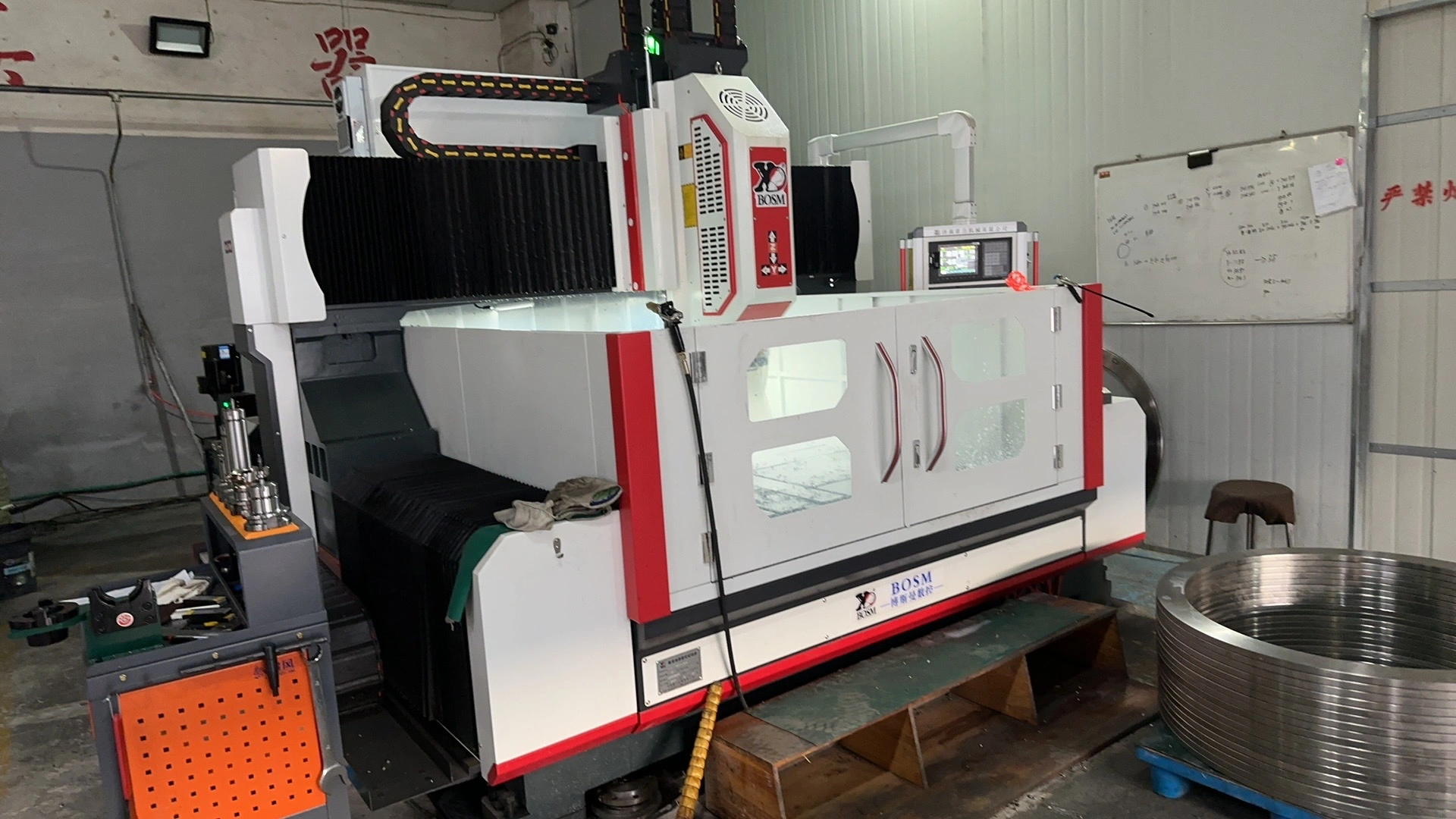
PSX Precision CNC Machining Equipment

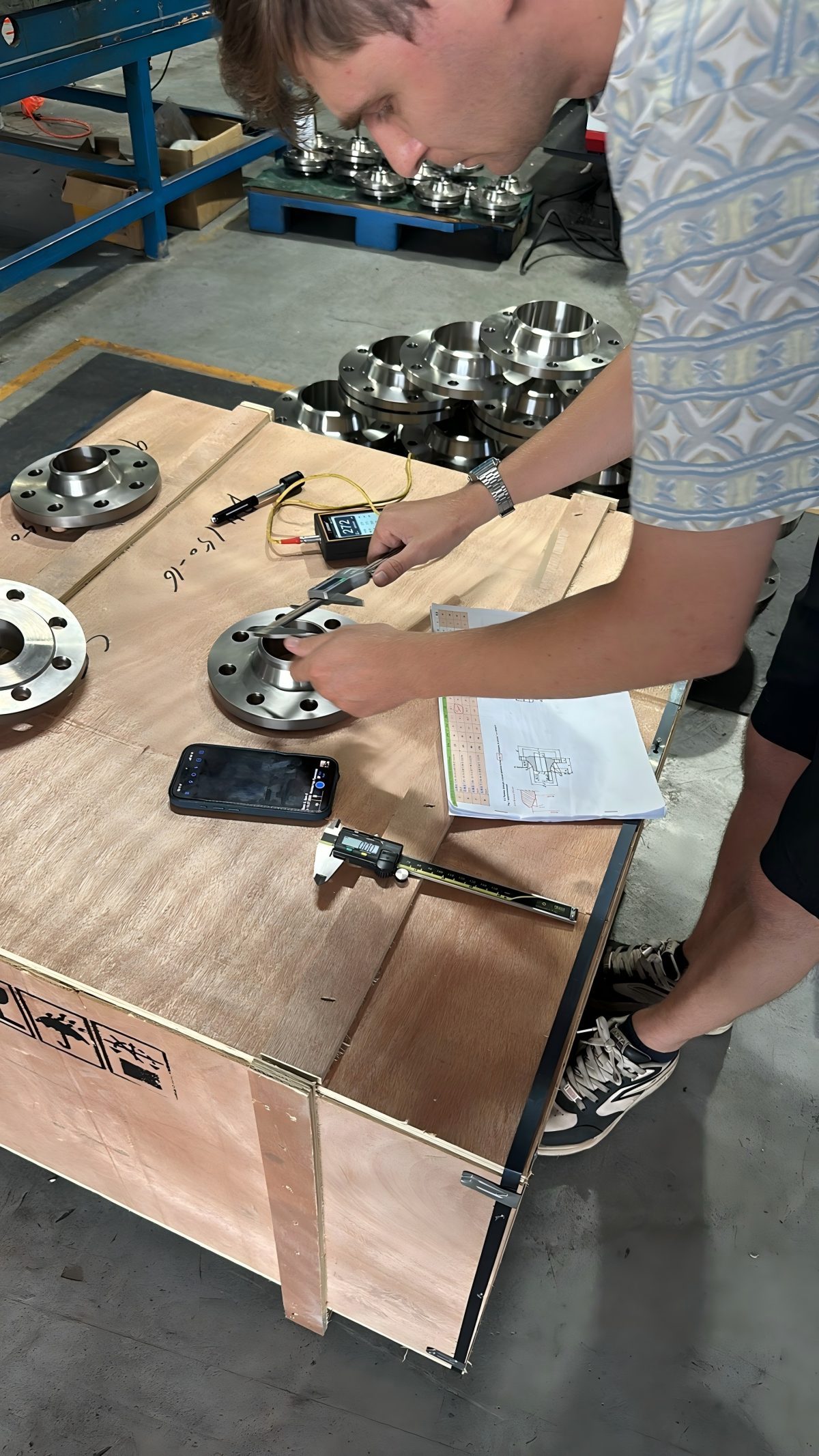
Complete inspection before assembly avoids costly rework after installation. All PSX Titanium Weld Neck Flange products pass factory inspection and come with complete MTR material test reports.

  • Check surface appearance: no cracks, pores, scratches, delamination or oxidation defects on sealing surface and neck transition zone.
  • Verify dimension: inner diameter, bolt hole pitch, flange thickness and neck height comply with ASME B16.5 or ASME B16.47 standards.
  • Confirm material grade label: distinguish Gr2 pure titanium and Gr5 titanium alloy for different working conditions.
  • Inspect sealing surface flatness; burrs and uneven surfaces will cause long-term leakage risks.
  • Check attached documents: chemical composition data, mechanical test results and ultrasonic inspection records.

6. Aligning the Flange with Piping System

  1. Clean the pipe end and flange welding bevel thoroughly with solvent to remove all pollutants.
  2. Place the titanium weld neck flange on the pipe end, keep the tapered neck aligned with the pipe centerline.
  3. Control uniform assembly gap; asymmetric gaps will lead to uneven welding penetration and stress concentration.
  4. Use level gauge to adjust verticality and concentricity of flange and pipeline.
  5. Do not force assembly with heavy hammer impact; forced positioning easily causes flange deformation and sealing failure.
  6. Fix temporary positioning fixtures after alignment before starting tack welding.

7. Welding Techniques for Titanium Weld Neck Flanges

Full-penetration butt welding is the core requirement for High Strength Titanium Weld Neck Flange. Ordinary steel welding parameters cannot be applied to titanium materials.

  • Adopt GTAW TIG welding with pure argon shielding; realize full penetration of the weld seam.
  • Implement back shielding to prevent oxidation on the internal weld surface; blue or grey discoloration means failed protection.
  • Control welding heat input to avoid excessive grain growth which reduces titanium alloy fatigue resistance.
  • Complete tack welding first, then formal continuous welding to reduce deformation.
  • Clean oxide layers in time after each welding pass before depositing the next layer.

8. Post-Weld Inspection and Quality Assurance

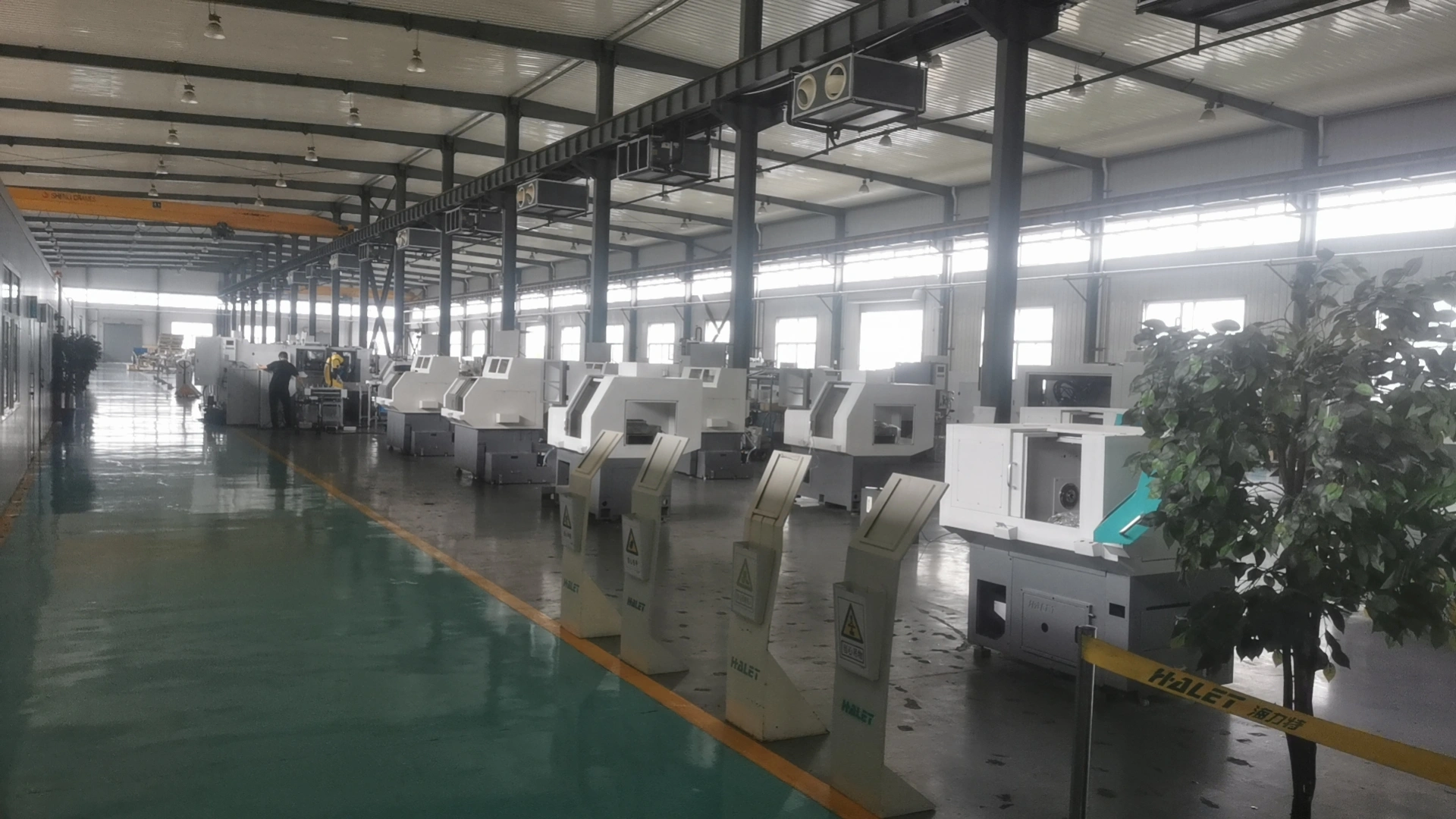
PSX Titanium Production Workshop
  1. Visual inspection: check weld shape, surface oxidation, crack and incomplete penetration defects.
  2. Carry out penetrant testing (PT) or ultrasonic testing (UT) according to project pressure grade requirements.
  3. Remove welding spatter and surface oxide without damaging the base Titanium Material .
  4. Complete hydraulic pressure test or air tightness test after the weld fully cools down.
  5. Record all inspection data for engineering acceptance and later maintenance files.

9. Common Installation Mistakes to Avoid

  • ❌ Using carbon steel grinding tools directly on titanium surface, leading to iron contamination and corrosion.
  • ❌ Insufficient argon shielding during welding, resulting in brittle oxidized weld joints.
  • ❌ Excessive hammer impact during assembly causing flange deformation and uneven sealing surface.
  • ❌ Mismatched material grade: using Gr2 flanges for high-pressure heavy vibration conditions requiring Gr5 Titanium Alloy.
  • ❌ Ignoring concentric alignment, creating long-term alternating stress at weld joints.
  • ❌ Using ordinary gaskets incompatible with titanium for corrosive medium pipelines.

10. Maintenance Tips for Longevity and Performance

Correct daily maintenance can extend the service life of titanium weld neck flanges up to 15–30 years in corrosive environments.

  • Regularly inspect bolt torque under vibration and alternating temperature working conditions to prevent loose sealing.
  • Keep the sealing surface clean; remove sediment and particle impurities regularly.
  • Avoid long-term contact with high-concentration strong oxidizing media beyond material application limits.
  • For shutdown equipment, only implement dust protection; titanium requires no anti-rust paint treatment.
  • Record operating temperature, pressure and medium status to formulate periodic inspection plans.

11. Industry Standards for Titanium Weld Neck Flange

Global industrial engineering projects enforce unified standards for titanium pipeline fittings. All PSX titanium flanges strictly comply with international specifications to satisfy overseas engineering acceptance:

  • Dimensional Standards: ASME B16.5, ASME B16.47 Series A & B, GB/T 9113
  • Titanium Material Standards: ASTM B348, ASTM B381
  • Pressure Class: Class150, Class300, Class600, Class900, Class1500, Class2500
  • Certification Standard: ISO9001, GJB9001C-2017

12. 2026 Latest Industry Technology Trends for Titanium Pipeline Fittings

Global demand for titanium piping components continues to expand driven by offshore wind power, green hydrogen production, deep-sea exploitation and new material manufacturing industries. Engineering contractors increasingly replace traditional stainless steel fittings with high strength titanium products to lower whole-life maintenance expenditure. Manufacturers accelerate upgrading integrated forging and high-precision CNC production technology to control tolerance within ±0.001mm. New surface passivation and anodic oxidation processes further improve the wear resistance and high-temperature stability of titanium components. Meanwhile, non-standard customized titanium flange solutions become mainstream, as special working condition projects require drawing-based OEM and small-batch trial orders. Sustainable low-carbon titanium processing has gradually become a core competitive advantage for top manufacturers serving European and American industrial buyers.

13. Five Core Concerns of European & American Industrial Purchasers

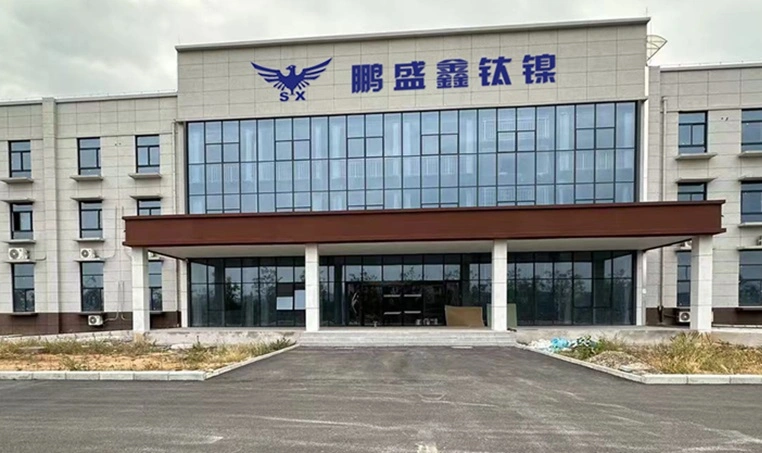
PSX Company Front Desk

After years serving global purchasing managers, OEM factories and industrial distributors, PSX summarizes five key requirements buyers focus on when sourcing Titanium Weld Neck Flange. First, strict standard compliance; products must match ASME and ASTM specifications and support third-party inspection. Second, genuine raw material quality; buyers demand complete MTR certificates to avoid mixed materials causing project safety risks. Third, precise dimensional tolerance; high-end chemical and marine projects cannot accept dimensional deviation affecting on-site installation. Fourth, flexible customization capacity, including non-standard sizes, thickened high-pressure flanges and special sealing faces. Fifth, reliable delivery cycle and professional technical support, including installation guidance, material selection advice and complete export documentation to reduce project schedule risks.

14. PSX Factory Strength & Manufacturing Advantages

Baoji Pengshengxin Non-Ferrous Metal Co., Ltd. (PSX) founded in 2008, located in China’s Titanium Valley Baoji, specializes in producing High Strength Titanium Weld Neck Flange, Titanium Flange, Titanium CNC Machining, Titanium Tube and titanium alloy components. Our factory covers over 5,000 square meters equipped with advanced CNC lathes, vertical machining centers and professional non-destructive testing equipment.

We own a professional technical team with more than 10 material engineers, capable of independent process development for titanium forging and precision machining. All products adopt qualified Titanium Ingot raw materials and pass multi-stage quality inspection before shipment. PSX supports standard inventory orders and OEM/ODM customized non-standard titanium flanges, providing stable supply for marine, petrochemical, new energy and aerospace clients worldwide. We provide complete material test reports, export documents and professional on-site installation technical consultation for global purchasers.

15. Frequently Asked Questions (FAQ)

Q1: What is the difference between Gr2 and Gr5 titanium weld neck flanges during installation?

A1: Gr2 pure titanium weld neck flanges feature excellent ductility and corrosion resistance, suitable for medium-low pressure seawater desalination and general chemical pipelines. Gr5 titanium alloy flanges have higher tensile strength and high-temperature performance, applied for high-pressure, vibration-intensive offshore and aerospace piping systems. Welding parameters and load limits differ significantly, so buyers must select grades according to working parameters before installation.

Q2: Can titanium weld neck flanges connect directly with stainless steel piping?

A2: Direct connection without transition measures will trigger galvanic corrosion. Professional transition welding and matched isolation gaskets are required to ensure long-term stable operation.

Q3: What are the main failure causes after incorrect flange installation?

A3: Common failures include weld oxidation, stress concentration cracking, sealing surface damage, flange deformation and medium leakage. Most problems originate from poor cleaning, improper welding protection and forced assembly.

Q4: Does PSX provide installation technical guidance for titanium weld neck flanges?

A4: Yes. We supply technical documents covering material selection, welding suggestions and installation specifications for all bulk and customized orders. Our engineering team can provide remote technical support for overseas project teams.

Q5: Can PSX produce non-standard titanium weld neck flanges based on customer drawings?

A5: Absolutely. We support drawing customization for special diameter, pressure grade, thickened structure and special sealing face titanium weld neck flanges.

Reference Materials

  • Harrison, T. (2025). Titanium Welding & Pipeline Flange Installation Guidelines. Reddit Industrial Engineering Forum.
  • Peterson, R. (2026). Corrosion Control for Titanium Alloy Piping Systems. Quora Industrial Material Technology Column.
  • Wikipedia. (2025). Weld Neck Flange: Installation, Welding and Structural Characteristics. Wikimedia Foundation.
  • NACE International (2025). Material Selection & Assembly Specification for Corrosion Resistant Industrial Pipelines.
PSX Brand Logo

Baoji Pengshengxin Non-Ferrous Metal Co., Ltd (PSX)

Professional Manufacturer of High Strength Titanium Weld Neck Flange, Titanium Forging, Titanium CNC Machining, Titanium Tube and Titanium Alloy Components

Established in 2008 | ISO9001 & GJB9001C Certified | Global Custom Titanium Solution Provider

Contact Us

Author:

Mr. Aaron Shen

Phone/WhatsApp:

+86 13709173123

Popular Products
You may also like
Related Categories

Email to this supplier

Subject:
Email:
Message:

Your message must be between 20-8000 characters

  • Send Inquiry

Copyright © 2026 Baoji Pengshengxin Nonferrous Metals Co., Ltd. All rights reserved. Privacy Policy

We will contact you immediately

Fill in more information so that we can get in touch with you faster

Privacy statement: Your privacy is very important to Us. Our company promises not to disclose your personal information to any external company with out your explicit permission.


Send