


Send Message
Privacy statement: Your privacy is very important to Us. Our company promises not to disclose your personal information to any external company with out your explicit permission.



For procurement managers serving oil & gas, chemical plants, offshore operators, OEM manufacturers, distributors and system integrators, reliable corrosion-resistant piping components directly reduce unplanned shutdowns, leakage risks and long-run maintenance costs. The Titanium Eccentric Weld Neck Flange stands out from conventional concentric flanges, slip-on flanges and multi-piece reducer-flange assemblies. It combines an eccentric reducer and weld neck butt-weld flange into a single integrally forged unit, manufactured from premium Titanium Material and finished by precision Titanium CNC Machining. This article breaks down its core industrial advantages, suitable working scenarios, standards, maintenance rules and supplier insights from PSX, your trusted Titanium Forging manufacturer.
A Titanium Eccentric Weld Neck Flange is a one-piece forged component integrating an eccentric reducer and weld neck flange. Unlike separate reducer and flange parts that require extra field welding, this integrated design eliminates extra weld seams that easily trap sludge and suffer corrosion failure. The long tapered neck redistributes pipeline stress, while the eccentric bore maintains a flush bottom line to avoid liquid pooling, air lock and cavitation. It is widely matched with Titanium Tube and other titanium fittings for sediment-laden liquid, brine, seawater and acid-alkali corrosive pipelines. PSX produces these flanges from Gr1, Gr2, Gr5, Gr7 and Gr12 Titanium Alloy grades, supporting both standard and non-standard OEM customization.
One of the most valued advantages of Titanium Eccentric Weld Neck Flange is natural corrosion protection. Titanium spontaneously forms a stable passive oxide film on its surface, resisting chloride ions, brine, moist chlorine gas, organic acids and many corrosive process media that quickly erode carbon steel, stainless steel and ordinary alloy flanges.
Compared with coated flanges, this passive protection does not peel or degrade over time, which is a major reason our Titanium Flange series is preferred for chlor-alkali, salt lake lithium extraction and wastewater treatment systems.
Titanium delivers outstanding specific strength, roughly 40% lighter than stainless steel with comparable mechanical performance. This lightweight property cuts structural loads for offshore platforms, skid-mounted modules and subsea piping without sacrificing pressure-bearing capacity. For marine and mobile process equipment projects, the weight saving reduces lifting, support and foundation engineering costs. Our Titanium Forging process controls internal grain flow along the tapered neck, ensuring the flange body handles burst pressure and cyclic load reliably.
Quality Titanium Eccentric Weld Neck Flange maintains stable mechanical performance across a wide working temperature window. It resists thermal shock and repeated temperature cycling common in heat exchanger loops, batch chemical reactors and oil gathering pipelines. The tapered weld neck transfers thermal stress gradually instead of concentrating stress at the flange face, lowering cracking risk during frequent heating and cooling. It is suitable for both continuous steady-state production and intermittent batch process lines, outperforming plate flanges in variable-temperature corrosive service.
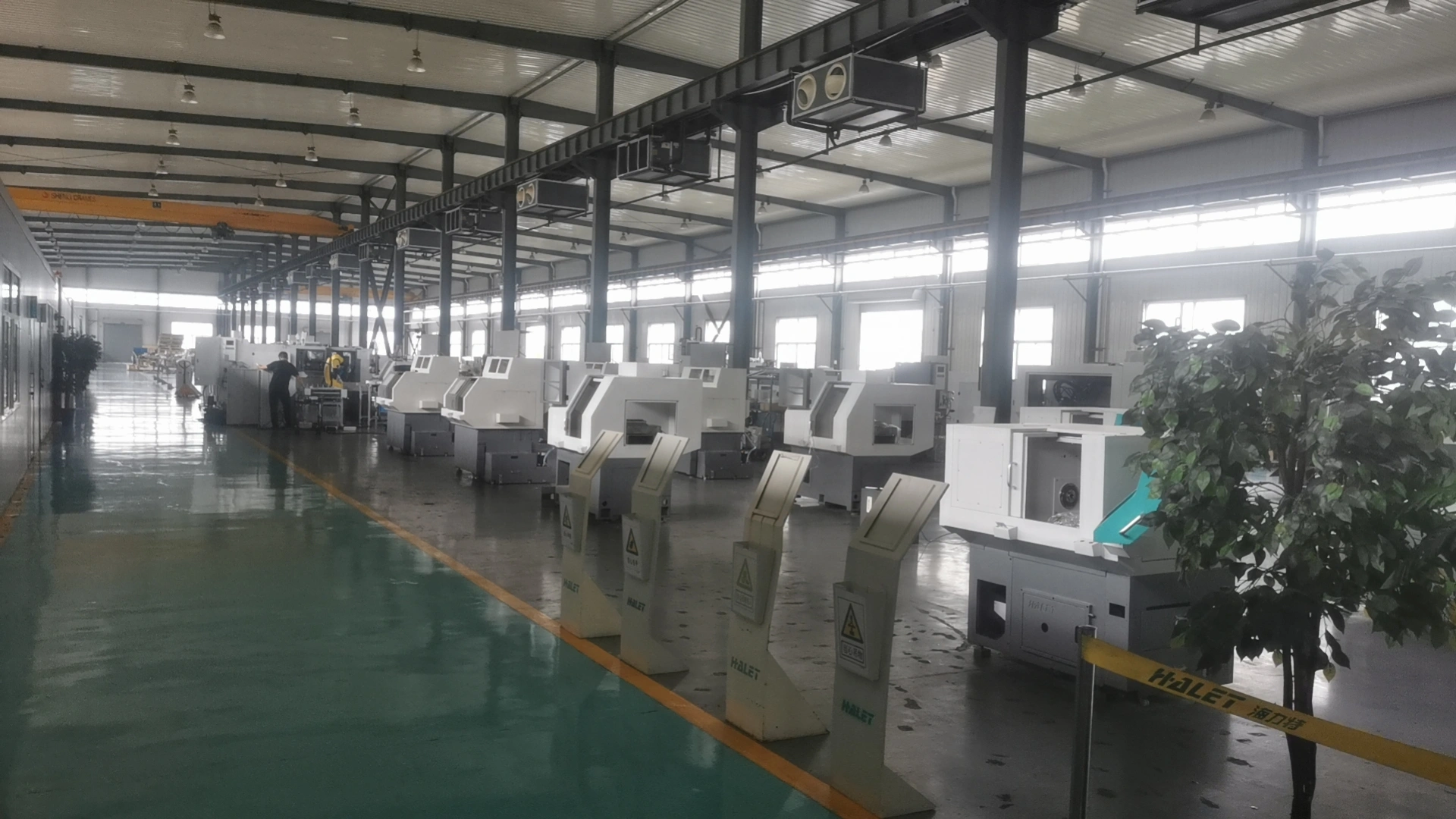
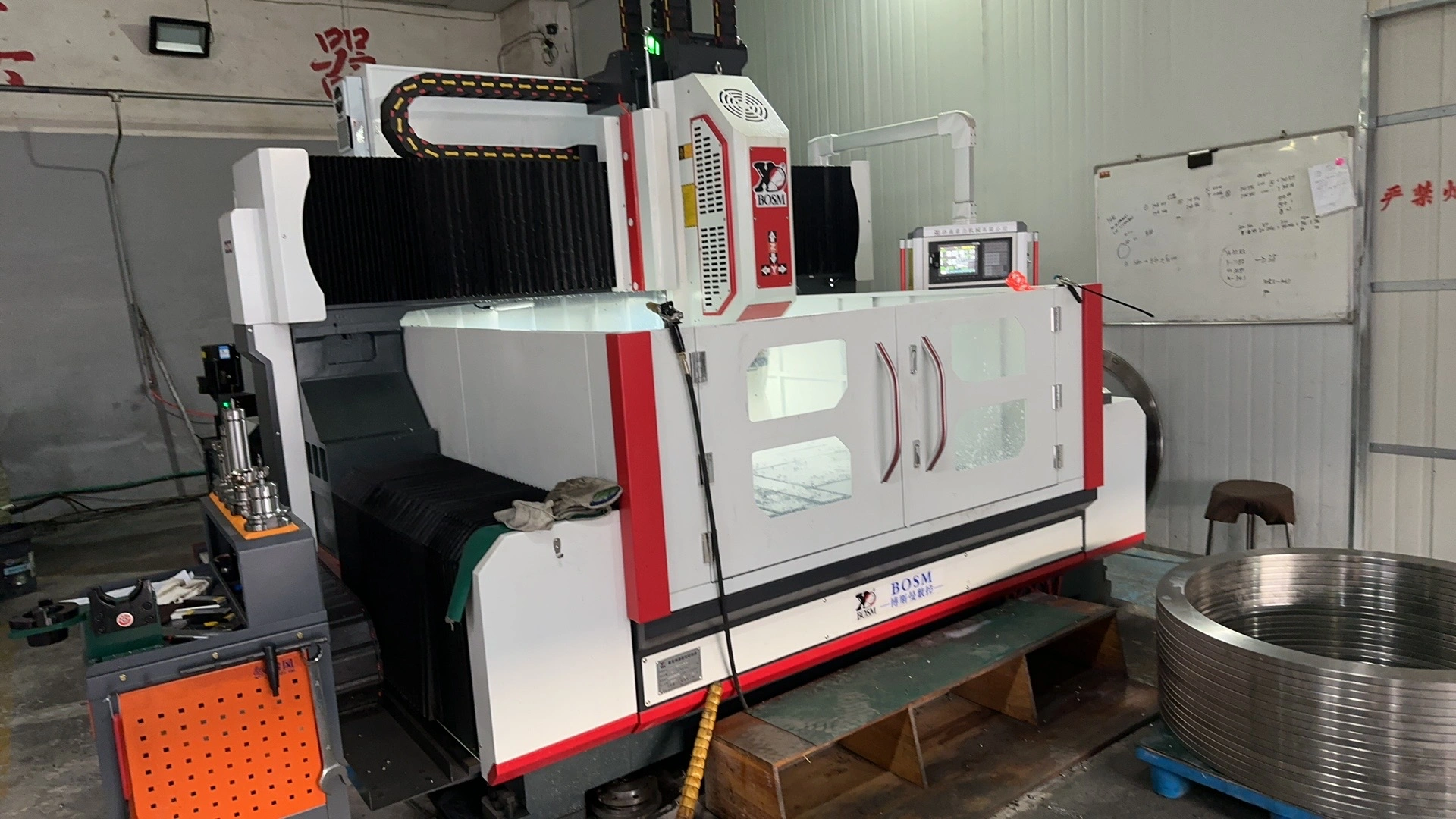
Integral forging is the core guarantee of long service life. Since there are no secondary weld joints between reducer and flange, the component avoids hidden corrosion and fatigue failure at auxiliary welds. When paired with proper titanium grade selection, these flanges can run for many years with minimal degradation, even in harsh brine and chloride-rich environments. Lower frequency of replacement directly cuts plant shutdown loss, which is critical for continuous chemical, desalination and offshore production. PSX’s 5,000+ ㎡ manufacturing workshop uses imported vertical milling centers and precision lathes, holding tolerances down to ±0.001mm for custom Titanium Alloy components. Our R&D team includes more than 10 professional engineers and multiple PhD technical specialists, continuously optimizing forging and heat treatment processes for long-life piping parts.
While the upfront procurement price of Titanium Eccentric Weld Neck Flange is higher than carbon steel or standard stainless steel flanges, the total cost of ownership is much lower for corrosive process service. It reduces spare part inventory, inspection labor, shutdown downtime and emergency replacement expenses. Many North American and European EPC and plant owners calculate lifecycle cost instead of unit price for critical piping. PSX supports batch supply, prototype sampling and same-material matched fittings, helping buyers simplify the supply chain and avoid material mismatch risks.
The flush eccentric bottom profile is the key functional advantage over concentric weld neck flanges. It eliminates low-point dead zones where sediment, sludge and solid particles settle, preventing air lock, cavitation and localized under-deposit corrosion. This stabilizes flow rate, reduces turbulence and protects downstream pumps, valves and heat exchangers. It is especially valuable for slurry pipelines, brine transfer, acid washing lines and continuous liquid-phase chemical media. This optimized flow design is why many process engineers specify this flange type instead of assembling separate eccentric reducers plus standard flanges.
The Titanium Eccentric Weld Neck Flange serves a broad range of demanding industrial sectors:
The unified forging structure reduces field fitting and welding steps compared with two-piece assemblies. The standardized butt-weld groove design matches common titanium WPS welding procedures. However, titanium has unique handling rules, so we summarize practical operation and maintenance guidance for your site team.
Titanium is a clean, stable non-ferrous metal with no heavy metal leaching, suitable for food-grade, pharmaceutical and high-purity fluid systems. It does not release toxic substances even under long-term corrosive exposure. Titanium components are fully recyclable, aligning with global low-carbon and sustainable manufacturing trends. For wastewater and zero-liquid-discharge projects, non-contaminating titanium piping avoids secondary pollution risks that plague coated or lined metal alternatives.
International buyers require clear standard compliance and traceability for pressure-containing flanges. Below are core specifications you should confirm before ordering Titanium Eccentric Weld Neck Flange:
Qualified export shipments include full MTR, heat treatment records, dimensional inspection reports and NDT documentation; third-party PMI witness testing can be arranged on request.
Global process industries are shifting away from field-fabricated reducer-flange combinations toward single-piece forged titanium components. Multi-part assemblies introduce extra weld seams that become fatigue and corrosion weak points in offshore sour brine and cyclic temperature service. Modern near-net-shape hot die forging reduces raw material waste and optimizes grain orientation along the tapered neck, improving fatigue resistance. CFD flow simulation and FEA stress analysis are increasingly used to optimize eccentric transition profiles and predict cavitation zones before machining. EPC contractors now prioritize full digital traceability from titanium billet to finished flange serial number for asset lifecycle management, and demand for Gr7 and Gr12 grades keeps rising with desalination and salt chemical expansion projects.
Procurement managers from the US, EU and Oceania focus on five non-negotiable points when sourcing Titanium Eccentric Weld Neck Flange and related Titanium Flange products. First, material grade authenticity and traceability, with PMI testing required to avoid grade substitution fraud. Second, forging integrity: cast titanium flanges are rejected for pressure boundary service, buyers demand proof of integral forging and non-destructive inspection. Third, predictable lead times for brownfield emergency retrofits; custom eccentric geometry often creates schedule bottlenecks. Fourth, professional technical support on titanium welding, purge requirements and compatible gasket selection. Fifth, reliable after-sales support and spare availability, because offshore and chemical plant shutdown windows carry extremely high opportunity cost. Unit price alone rarely decides supplier selection for these critical corrosion-resistant piping parts.
Current R&D for titanium forged piping components centers on balancing corrosion resistance, fatigue life and manufacturability. Optimized low-deformation hot forging cycles control residual stress while preserving the natural passive oxide film, lowering stress corrosion cracking risk in chloride-rich media. Combined CFD and FEA simulation workflows shorten prototype iteration cycles, helping engineers refine eccentric transition geometry to minimize turbulence and sediment trapping. New precision polishing protocols for RTJ ring joint grooves reduce micro-notch sensitivity under repeated thermal cycling. Application expansion is strongest for modular desalination skids, salt lake lithium extraction brine pipelines and industrial zero-liquid-discharge wastewater systems. PSX’s engineering team continuously upgrades Titanium CNC Machining parameters based on these R&D results, delivering custom eccentric flanges and matched fittings for global OEM, EPC and distributor clients.
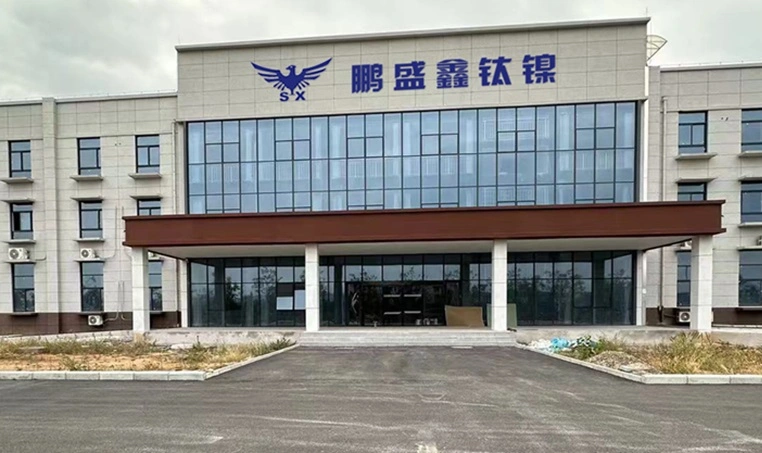
For corrosive liquid piping prone to sediment, air lock and cavitation, the Titanium Eccentric Weld Neck Flange delivers unmatched integrated benefits: superior corrosion resistance, high strength-to-weight ratio, stable thermal performance, extended service life, optimized fluid flow and low lifecycle cost. As a manufacturer founded in 2008 in Baoji “China Titanium Valley”, PSX supplies Titanium Forging, Titanium Flange, Titanium CNC Machining parts, Titanium Tube and Titanium Rod for oil, chemical, marine, desalination and new-energy industries. Our ISO9001 and GJB9001C-2017 certified production system supports global export and OEM customization. Contact our engineering team for drawing review, grade recommendation and formal quotation.
Carter, L. (2025). Corrosion Control for Titanium Process Piping in Chloride Environments, Reddit r/ChemicalEngineering Technical Discussion.
Hale, T. (2024). Flange Selection for Slurry and Sediment Laden Industrial Pipelines, Quora Process Engineering Space.
ASME. (2023). ASME B16.5 Standard for Pipe Flanges and Flanged Fittings, ASME Standards Publication.
Wikipedia Contributors. (2025). Titanium: Industrial Metallurgy and Corrosion Behaviour, Wikipedia.
Outline:
Summary: This SEO-focused article explains the core industrial advantages of Titanium Eccentric Weld Neck Flange for oil, chemical, offshore, desalination and new-energy procurement managers. It covers corrosion resistance, lightweight strength, thermal stability, flow optimization, lifecycle economics, installation guidance, relevant international standards, current forging technology trends and overseas buyer priorities. PSX is positioned as an integrated manufacturer of Titanium Forging, Titanium Flange and Titanium CNC Machining products, with full certification and OEM custom capabilities for global export orders.

September 15, 2025

November 18, 2026
Email to this supplier
September 15, 2025
November 18, 2026
Privacy statement: Your privacy is very important to Us. Our company promises not to disclose your personal information to any external company with out your explicit permission.
Fill in more information so that we can get in touch with you faster
Privacy statement: Your privacy is very important to Us. Our company promises not to disclose your personal information to any external company with out your explicit permission.